
Your rankings held. Your traffic didn’t. That gap is where AI search visibility lives, and most brands have no system for tracking it. The stakes are real: brands cited in AI-generated answers earn measurably more clicks, while those left out watch traffic erode quietly.
Introduction
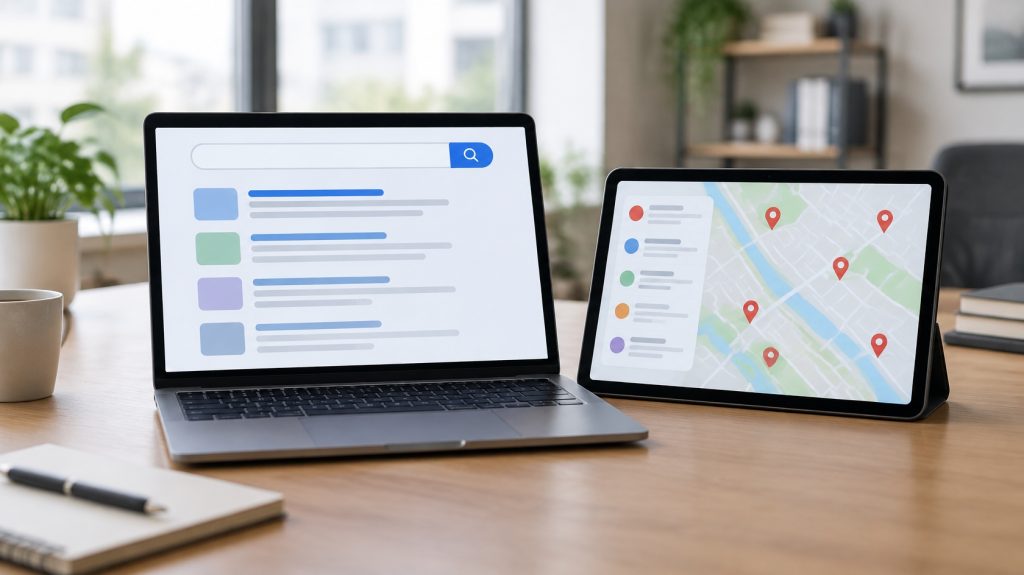
AI search has changed how buyers find information. ChatGPT, Perplexity, Google AI Overviews, and Gemini now synthesize answers directly, often without sending users anywhere. Traditional rank tracking tells you where you appear on a results page. It says nothing about whether an AI tool mentions your brand, cites your content, or recommends a competitor instead.
Knowing how to monitor your AI search visibility effectively has become a practical business requirement. The overlap between top-10 Google rankings and AI Overview citations has collapsed from 75% in mid-2025 to between 17% and 38% by early 2026, according to BrightEdge. High organic rankings no longer guarantee AI presence.
The brands pulling ahead are the ones measuring what actually matters: citation share, mention rate, and prompt-level visibility across multiple AI platforms. Getting that measurement right is where strategy begins.
What AI Search Visibility Means in 2026
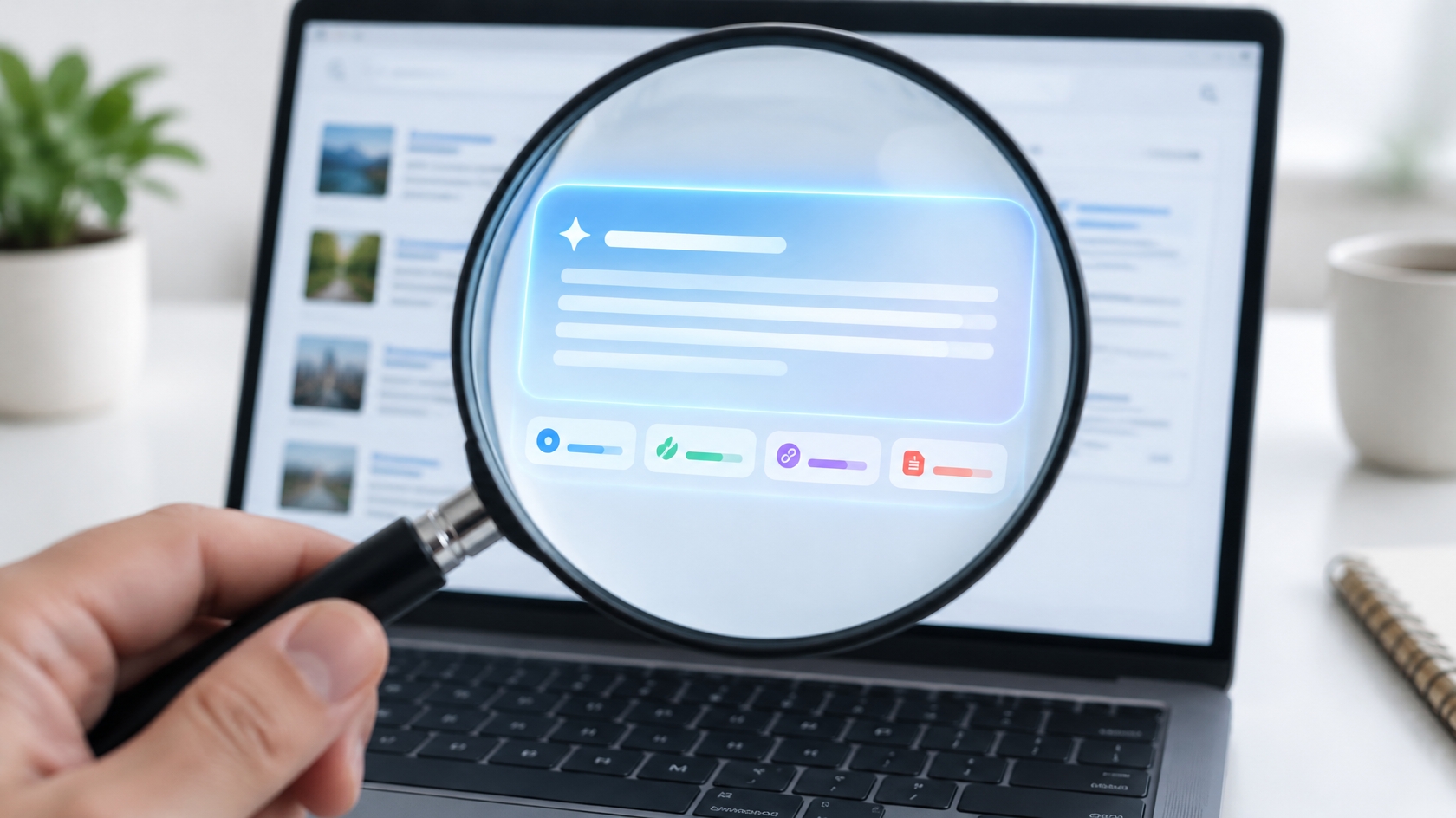
AI search visibility is the degree to which your brand, content, or pages are cited, surfaced, or recommended inside AI-generated responses. It is distinct from ranking position because AI systems do not return a ranked list. They synthesize one answer and name a few sources.
The shift is from ranking to inclusion. There is no list to climb, only being in the answer or left out of it. A mention works more like a recommendation than a position.
Three signals define AI search visibility:
- Citation share of voice: How often your brand is cited compared to competitors across a defined set of prompts
- Source URL inclusion: Which specific pages AI tools pull from when constructing answers
- Mention sentiment: Whether your brand is framed positively, neutrally, or negatively when it appears
What makes this distinct from conventional SEO is context. Before referencing a brand, AI systems analyze meaning, trust, relevance, and entity signals. According to research from Muck Rack and Generative Pulse, non-paid media drives 95% of AI citations, meaning brands earn space inside ChatGPT, Gemini, Claude, and Perplexity answers through authority, not spend.
How AI Visibility Monitoring Works
AI visibility monitoring is a measurement workflow that tracks whether answer engines include your brand, how prominently they frame it, which sources they cite, and whether they recommend competitors instead. It combines prompt sampling, response capture, entity analysis, citation review, and trend reporting.
The mechanics differ substantially from traditional SEO tools, which track keyword rankings and backlinks on a results page. AI visibility tools track whether you appear inside the AI-generated answer itself.
Prompt Monitoring: Why Prompts Are Not Keywords
Prompts are complete buyer questions, not keyword fragments. AI search engines respond to questions with context. Instead of optimizing for “best CRM for startups,” effective monitoring targets something like “what’s the best CRM for a five-person sales team with a $500/month budget?”
A well-structured prompt set maps to the buyer journey. Recommended categories include category intent, problem-aware queries, comparison prompts, branded queries, competitor-branded queries, and use-case-specific questions.
Each prompt is run multiple times per engine in a logged-out session, because a single run is an observation, not a measurement. Experts recommend sampling each prompt three to five times per engine to capture the rate rather than a single outcome.
Citation Tracking: The Action Layer
Citation tracking identifies which specific URLs an AI tool used to construct a response that included your brand. This tells you exactly which publishers, creators, or review sites taught the model what it knows about you.
The data reveals where gaps or inaccuracies originate. According to research from AirOps, brands that earn both citations and mentions are 40% more likely to resurface across multiple AI answers than citation-only brands. Monitoring citation sources also surfaces third-party content opportunities, since only 2.9% of AI citations point to a brand’s own domain. The other 97% is third-party web.
Hallucination Detection and Accuracy Audits
AI tools sometimes describe brands incorrectly. They may cite outdated pricing, misstate capabilities, or attribute claims that belong to a competitor. Hallucination detection is the process of comparing what AI tools say about your brand against what is actually true.
This matters most in regulated industries. Financial services, healthcare, and legal brands face the highest risk of AI-generated inaccuracies, and the reputational cost of a wrong answer is significant. A structured accuracy audit runs a defined prompt set, captures responses, and flags any factual errors for content correction.
Metrics That Actually Matter for AI Visibility
The metrics that actually matter for AI visibility measure inclusion, not position. Most marketing teams are still measuring success by position-one rankings that fewer users ever see. The metrics that reflect AI search reality are different, shifting the focus from where a page ranks to whether it is cited, mentioned, and framed positively inside AI-generated answers.
The primary KPIs for AI search visibility are citation frequency, share of voice, mention sentiment, prompt coverage, recommendation rate, and AI referral conversion. Each maps to a different layer of the buyer journey.
Brand Presence Rate
Brand presence rate measures the percentage of tested prompts where your brand name appears anywhere in the AI-generated answer. It is the most fundamental visibility metric, establishing whether AI systems consider your brand relevant enough to reference in your category.
A healthy benchmark for a category with five to ten credible players is a 20 to 30% presence rate across your tracked prompt set. According to MaxAEO, the median brand earns a mention in roughly 31% of relevant, non-branded AI answers. The top quartile reaches approximately 58%. Brands in the bottom quartile, under 12%, are effectively invisible to AI-driven discovery.
Citation Rate and Source Authority Signals
Citation rate measures how often an AI search engine links to your website or a page from your domain as a source. It is distinct from mention rate: an AI tool can name your brand without linking to you, and it can link to you without naming you.
According to Superlines.io analysis of 34,234 AI responses, citation rates vary dramatically by platform. Grok leads at 27.01%, followed by Perplexity at 13.05%, Google AI Mode at 9.09%, Gemini at 6.38%, Google AI Overview at 2.11%, and ChatGPT at 0.59%. Multi-platform tracking is essential because a brand’s citation profile looks very different depending on which AI tool you measure.
A 4-Step System to Monitor AI Search Visibility
Effective monitoring is not a one-time audit. It is a repeatable system. According to AirOps, only 30% of brands remain visible in consecutive AI-generated answers, and just one in five sustain visibility across five runs. That volatility makes a structured, ongoing baseline essential.
The core tooling stack requires a visibility checker, a tracker that logs prompts and citations, a data store for tracking changes over time, a reporting layer showing score deltas, and GA4 integration to attribute business impact.
Step 1: Build a Prompt Set That Matches Real Buyer Intent
Start by identifying the questions your buyers actually ask AI tools during research. These are not keywords. They are full questions with context, intent, and specificity.
A recommended query structure breaks prompts into category intent (25%), problem-aware queries (20%), comparison prompts (15%), branded queries (10%), competitor-branded queries (15%), and use-case-specific questions (15%). Aim for 30 to 50 prompts initially. Run each prompt across ChatGPT, Perplexity, Gemini, and Google AI Overviews in incognito mode, logging citation frequency, placement, and sentiment for each run.
Step 2: Measure Baseline Visibility and Diagnose Gaps
Once your prompt set is established, run it across your chosen platforms and record the results. This baseline tells you where you stand before any optimization effort.
Key signals to capture include mention rate per prompt, citation rate per prompt, which competitor brands appear where you do not, and the sentiment framing of any mentions. The gap matrix, a simple grid with key queries on one axis and cited brands on the other, reveals exactly which content gaps are costing you AI presence.
According to Conductor, 97% of digital leaders reported a positive impact from answer engine optimization in 2025, and 94% plan to increase their investment in 2026. The gap between brands tracking this systematically and those that are not is widening.
AI Visibility Tools Worth Using in the US
The AI visibility tools market is expanding rapidly. According to Mordor Intelligence, the AI Search Visibility Services market is projected to grow from $3.71 billion in 2025 to $4.39 billion in 2026. North America holds 44.51% of global revenue, reflecting how quickly US organizations have moved toward dedicated AI visibility programs.
Before selecting a tool, confirm it monitors at least four to five AI platforms, not just Google AI Overviews.
Quick Checkers vs. Ongoing Audit Platforms
Entry-level tools provide spot-check visibility across one or two platforms. They are useful for initial audits but insufficient for ongoing measurement. Basic monitoring starts at $20 to $30 per month from tools like Rankscale AI and ZipTie.
Mid-range platforms with deeper features, including Otterly AI and Peec AI, run $79 to $299 per month and offer multi-platform tracking, sentiment analysis, and competitive benchmarking.
Enterprise platforms such as Profound, Semrush AI Visibility Toolkit, and BrightEdge AI Catalyst provide citation intelligence, prompt databases at scale, and integrations with existing SEO workflows.
Profound has raised $58.5 million in funding and is used by over 500 organizations, including Fortune 10 clients. Semrush draws on 126 million prompts in its 2026 index. BrightEdge averages $127,000 per year in enterprise contract value.
When to Combine Multiple Tools
No single tool covers every platform with equal depth. ChatGPT, Gemini, Perplexity, Claude, and Google AI Overviews each behave differently, and citation rates vary up to 615 times across platforms for the same brand.
A practical stack combines a dedicated AI visibility tracker for prompt-level monitoring, GA4 for AI referral traffic attribution (filtering sessions by source domains including chat.openai.com, perplexity.ai, gemini.google.com, and claude.ai), and Google Search Console for AI Overview impression data. Teams running active campaigns benefit from weekly monitoring. Steady-state programs can operate on a monthly cadence with quarterly deep audits.
Turning Monitoring Signals into Content Action
Turning monitoring signals into content action means mapping what your tracking system captures directly to content priorities. Monitoring data is only useful if it drives decisions, and teams that treat citation gaps, missed mention opportunities, and competitor appearances as a content backlog move faster than those that treat monitoring as a reporting exercise alone.
The most effective optimization methods, according to Princeton and Georgia Tech GEO research, are citing sources (which improves AI visibility by approximately 40%), adding statistics (37%), including quotations (30%), and using technical terms (28%). Content updated within 30 days receives 3.2 times more AI citations than stale content, according to Seer Interactive.
Key actions to take based on monitoring signals include:
- Close citation gaps: When competitors appear for prompts where you do not, identify which content they hold and build a more authoritative version
- Refresh high-value pages: Pages losing citation share often need updated data, clearer structure, or stronger expert attribution
- Expand third-party presence: Brands present on four or more platforms are 2.8 times more likely to appear in ChatGPT recommendations
- Fix accuracy issues: Any hallucinated claims identified in accuracy audits should trigger immediate content corrections and outreach to third-party sources carrying the wrong information
- Prioritize E-E-A-T signals: Adding visible author credentials lifts AI citation rates by 40% across ChatGPT, Perplexity, and AI Overviews, according to research cited by AirOps
Conclusion
AI search visibility is now a measurable discipline with real business consequences. The brands earning consistent placement in AI-generated answers are pulling ahead in lead quality, brand authority, and organic efficiency. Those without a monitoring system are losing ground they cannot see.
The path forward is systematic. Build a prompt set that reflects real buyer intent, establish a baseline across multiple platforms, track the metrics that reflect inclusion rather than position, and connect monitoring signals to content action. Human judgment remains essential throughout. Automation scales the measurement. Strategy determines what the data means and what to do next.
Frequently Asked Questions
How much do AI search visibility tools cost in the United States?
AI search visibility tool pricing in the United States ranges from $20 to $30 per month for basic spot-checkers to $4,500 or more per month for enterprise platforms. The Semrush AI Visibility Toolkit is priced at $99 per month per domain for standalone access.
Enterprise contracts with platforms like Conductor range from $26,800 to $150,000 or more annually. Most mid-market teams find adequate coverage in the $79 to $299 per month range.
How does AI search visibility monitoring differ for US-based businesses compared to other markets?
North America holds 44.51% of global AI search visibility revenue, reflecting higher enterprise adoption and more mature GEO programs. US-based businesses face steeper competition for AI citation slots because more brands are actively optimizing.
US organic search traffic fell 2.5% year over year as of January 2026, making AI visibility a more urgent priority for American brands than in markets where AI Overview penetration is lower.
How volatile are AI-generated citations, and how often do they change?
AI citation volatility is significant. According to Profound’s research, cited domains changed by 59.3% on Google AI Overviews and 54.1% on ChatGPT when comparing June and July 2025 data for identical prompts. AI Overview content changes roughly 70% of the time for the same query.
This volatility is why weekly monitoring is the standard cadence for active programs, with monthly-only tracking now considered too slow for iterative teams.
How does generative engine optimization differ from traditional SEO?
Generative engine optimization (GEO) focuses on earning placement within AI-generated answers rather than ranking on a search results page. Traditional SEO competes for a position in a list. GEO competes for inclusion in a synthesized response.
The success metrics differ: SEO measures clicks and rankings, while GEO measures citation rate, mention rate, and share of voice across AI platforms. Importantly, 83% of AI Overview citations come from pages outside the organic top 10.
How long does it take to see results after implementing an AI visibility monitoring program?
AI visibility can move faster than traditional SEO. One documented case shows a brand moving from 16% to 53% visibility in its main topic within 10 days after publishing one well-structured piece of content with comparison tables, FAQs, and schema markup.
More typically, teams running a structured monitoring program with weekly prompt testing and content refresh cycles see measurable citation improvements within 30 to 90 days, depending on category competitiveness and content quality.